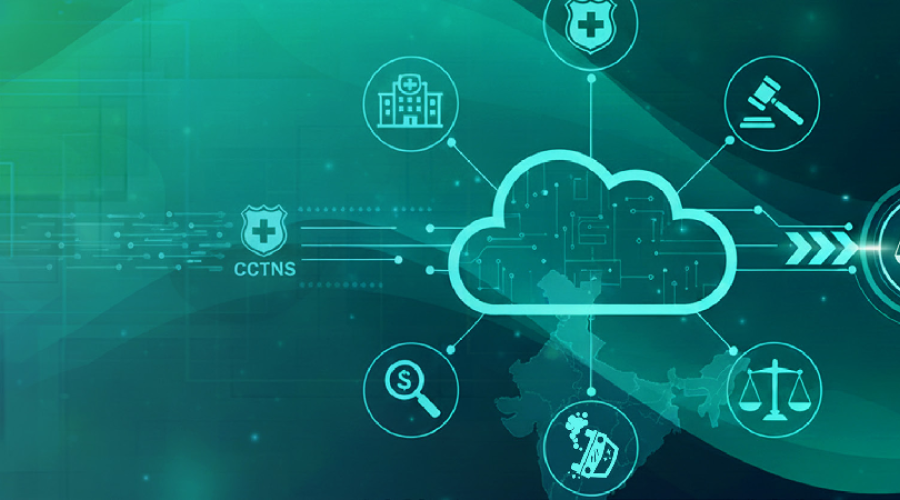
MedLEaPR is a national digital platform that streamlines medico-legal processes by securely connecting hospitals, police, forensic units, and the judiciary. Integrated with CCTNS, it enables paperless, standardized, and traceable medicolegal reporting, improving transparency, accountability, and the reliability of evidence for timely justice delivery.
The medico-legal ecosystem in India sits at the crossroads of some of the most sensitive and consequential domains of governance—public health, law enforcement, forensic science, judiciary, and public administration. Every injury report, post-mortem examination, or medicolegal certificate is not merely a medical document; it is a legal instrument that can influence investigations, trials, and justice delivery.
For decades, this ecosystem functioned largely through manual, paper-based processes. Handwritten reports, physical file transfers, fragmented approvals, and delayed communication between hospitals and police departments were the norm. These methods were slow, error-prone, difficult to audit, and vulnerable to loss, tampering, or misinterpretation.
MedLEaPR (Medico Legal Examination and Post Mortem Reporting) has emerged as a transformational digital response to these long-standing challenges. Designed and implemented as a mission-critical e-governance platform, MedLEaPR modernizes medico-legal workflows by introducing speed, transparency, accountability, and nationwide standardization.
What Is MedLEaPR?
MedLEaPR is a secure, workflow-based medicolegal management system that digitally connects all key stakeholders involved in medico-legal processes. These include:
- Government hospitals and medical officers
- Police departments
- Forensic laboratories
- Judicial and administrative authorities
The platform supports a wide range of standardized medico-legal forms and procedures, covering injury reports, post-mortem reports, and other medico-legal documentation.
One of MedLEaPR’s most significant strengths is its integration with the CCTNS (Crime and Criminal Tracking Network & Systems) portal. Through this integration, police departments can raise medico-legal case requests directly from CCTNS. These requests are instantly transmitted to the concerned hospitals through MedLEaPR, eliminating manual coordination and delays.
Doctors receive the requests digitally, prepare medico-legal reports using standardized templates, and submit them back through the same secure pipeline. This closed-loop system ensures seamless, traceable, and tamper-proof communication between departments.
Scale and Nationwide Adoption
MedLEaPR is not a pilot or a limited deployment—it is one of the largest operational medico-legal digital platforms in the country.
- 26 States and 8 Union Territories have adopted MedLEaPR
- Over 34 lakh medico-legal reports have been generated
- 60,000+ doctors actively use the platform
- 16,000+ hospitals are integrated
This scale reflects not only technical robustness but also institutional trust. MedLEaPR operates as a 24×7 mission-critical system, supporting continuous medico-legal operations across diverse geographies, hospital capacities, and administrative structures.
Solving Long-Standing Medico-Legal Challenges
Traditional handwritten medico-legal reports posed multiple challenges for investigators and the judiciary:
- Poor legibility and inconsistent handwriting
- Non-uniform formats across states and hospitals
- Difficulty in verifying authenticity
- High dependence on physical document movement
MedLEaPR directly addresses these issues through standardized, legally compliant digital formats. Reports are clear, uniform, and easily readable, significantly improving their usability in courts of law.
The platform also offers pictorial representation of injuries, allowing doctors to mark injury locations visually. This reduces ambiguity and improves evidentiary clarity. Additionally, e-signature facilities ensure secure and legally valid authentication of reports.
All records are securely stored and maintained by the government, ensuring long-term availability, audit readiness, and transparency for future reference.
Key Features
MedLEaPR offers a comprehensive set of features designed around real-world medico-legal workflows:
- End-to-end digital case management from request to final report submission
- Standardized templates for injury reports, post-mortems, and medico-legal certificates
- Workflow-based approvals with freeze and unfreeze mechanisms to maintain data integrity
- Role-based access controls for doctors, police officers, forensic experts, and administrators
- Real-time dashboards and analytics for monitoring case status and institutional performance
- Integrated pictorial injury marking and e-signing for clarity and security
Together, these features ensure that medico-legal processes are faster, more reliable, and fully auditable.
Technology Stack and System Architecture
MedLEaPR is built on a modern, scalable, and resilient technology stack designed to handle large volumes of sensitive data without performance degradation.
Core Technology Stack
- Backend: Spring Boot-based microservices with asynchronous processing
- Frontend: React JS with Material UI for responsive and user-friendly interfaces
- Database: PostgreSQL with optimized indexing and partitioning
- Caching: Redis for high-speed access
- Messaging: Kafka for event-driven workflows and notifications
Software Architecture
The system runs on a distributed, multi-server cluster, featuring:
- Nginx reverse proxy for traffic management
- Load balancers for even distribution of user requests
- Horizontal scaling to handle peak, state-wide traffic
- Distributed file storage for secure document handling
This architecture ensures high availability, fault tolerance, and zero-downtime operations, even during periods of heavy usage.
Security by Design
Given the legal sensitivity of medico-legal records, security is foundational to MedLEaPR’s design.
The platform follows a multi-layered security architecture, including:
- End-to-end SSL/TLS encryption
- Zero-trust API access controls
- Tamper-proof audit logs
- Database encryption at rest
- File hashing to ensure evidence integrity
These safeguards ensure that medico-legal records remain authentic, confidential, and legally admissible at every stage.
Role-Based Authentication and Accountability
MedLEaPR implements a granular Role-Based Access Control (RBAC) framework to ensure that users can access only what they are authorized to.
- Each role—doctor, nodal officer, forensic expert, administrator—has clearly defined permissions
- JWT-based authentication ensures secure session management
- Every action is time-stamped and logged for audit compliance
This approach significantly reduces unauthorized access while strengthening accountability across departments.
MedLEaPR has been designed with long-term scalability and adaptability in mind.
- It supports state-level as well as national-level deployments
- It allows seamless integration with healthcare, policing, forensic, and judicial systems
- Its modular architecture enables easy expansion for new medico-legal modules, AI-driven analytics, and automation workflows
As India’s governance ecosystem evolves, MedLEaPR is well-positioned to serve as a foundational digital infrastructure for medico-legal services.
Conclusion
MedLEaPR represents more than a technological upgrade—it is a structural reform of India’s medico-legal processes. By replacing fragmented, manual workflows with a unified, secure, and transparent digital system, MedLEaPR strengthens the reliability of medico-legal evidence and, by extension, the justice delivery system itself.
In a domain where accuracy, timeliness, and integrity are non-negotiable, MedLEaPR stands as a powerful example of how thoughtfully designed digital governance can transform outcomes at a national scale.