Drug De-Addiction Registry Portal Cracking Down on Drug Pilferage in Punjab

Drug De-Addiction Registry Portal

Punjab’s Drug De-Addiction Registry Portal (DDRP) marks a major leap in the state’s fight against opioid addiction. Integrating Aadhaar-based biometric verification, AIpowered face recognition, and real-time drug inventory management, DDRP eliminates fake enrollments, prevents medicine pilferage, and ensures transparent treatment delivery. The unified digital registry allows patients cross-centre access and enables administrators to monitor anomalies instantly. By merging technology with governance, DDRP strengthens accountability, safeguards public resources, and builds renewed trust in Punjab’s de-addiction ecosystem.

Punjab has long been at the forefront of India’s struggle against opioid addiction. To confront this crisis, the state has built a wide network of Outpatient Opioid Assisted Treatment centres and partnered with private facilities to provide safe, affordable, and sustained treatment. These centres were designed to be places of hope — where patients could begin the difficult journey from dependence to recovery.

But alongside this progress emerged a set of hidden challenges. The very medicines meant to heal were vulnerable to pilferage and diversion. In some cases, patients were enrolled under duplicate identities; in others, gaps in manual record-keeping allowed leakages in the supply chain. Fake beneficiaries, ghost enrollments, and unmonitored drug inventories weakened the system, raising doubts about accountability and undermining the trust of both patients and citizens.

It was clear that treatment alone was not enough — the state needed a digital shield to secure the integrity of its de-addiction ecosystem. The Punjab Health and Family Welfare Department, with the support of NIC Punjab, responded with an innovation that combines governance with technology: the Drug De-Addiction Registry Portal (DDRP). By embedding Aadhaar-based biometric authentication, AI-powered face recognition, and real-time inventory management, DDRP ensures that medicines reach only genuine patients, every record is transparent, and every dose is accounted for.

This initiative represents more than a software system. It is a commitment to restoring confidence, protecting resources, and strengthening the fight against addiction through the power of digital governance.

The Challenge

While Punjab has invested in a network of Out-patient Opioid Assisted Treatment centres and private facilities, systemic gaps left the programme vulnerable:

  • Pilferage and diversion: Medicines meant for patients often leaked into the illegal market due to weak supply controls
  • Fake and duplicate enrollments: Ghost beneficiaries, forged identities, and multiple registrations consumed resources without delivering care
  • Manual and fragmented data: Paper-based registers and isolated records resulted in duplication, delays, and poor visibility
  • Restricted patient access: Patients were tied to a single centre, and treatment continuity was broken if medicines were unavailable there
  • Weak accountability: Without real-time monitoring, anomalies were only discovered during periodic audits
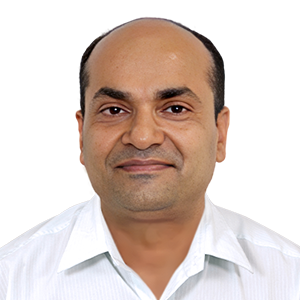
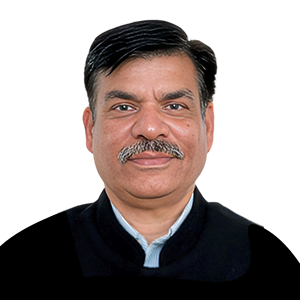
Shri Kumar Rahul
Shri Kumar Rahul, IAS

Principal Secretary

Department of Health & Family Welfare

The Solution

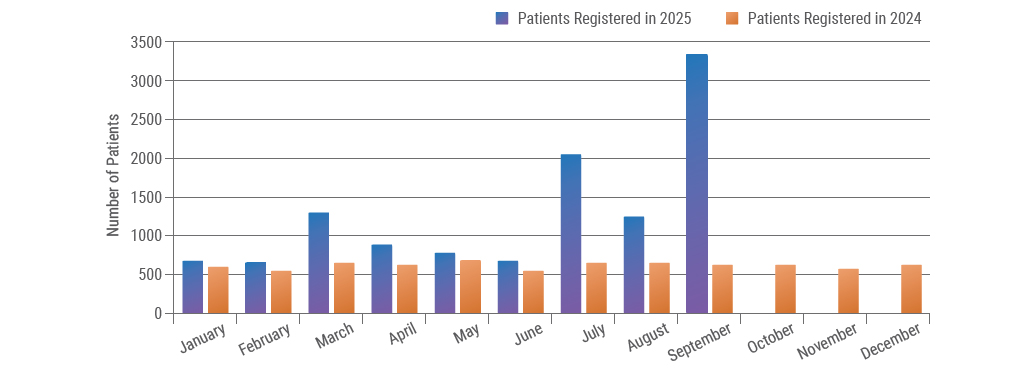
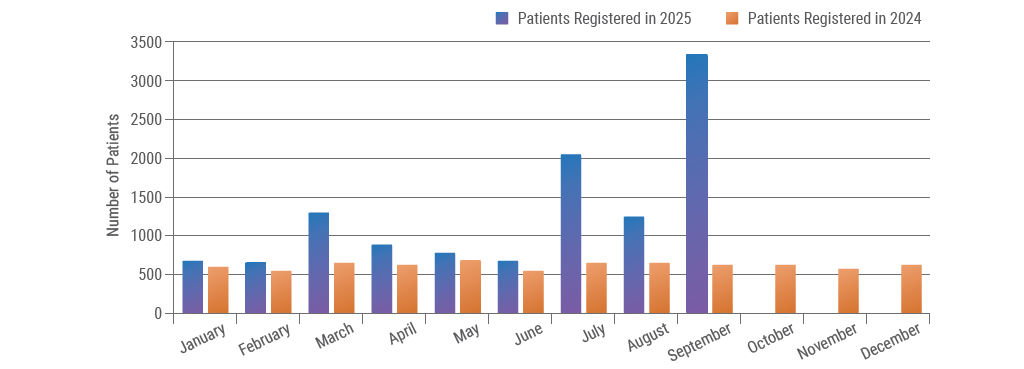
Patients Registration Month & Year Wise Patients Registration Month & Year Wise Fig 6.1: Patients Registration Month & Year Wise

The Drug De-Addiction Registry Portal (DDRP) was designed to directly address these pain points through a digital-first approach:

  • Secure identity checks using Aadhaar-based biometric authentication, strengthened by AI-driven face recognition and geofencing
  • Seamless integration with eAushadhi, ensuring real-time inventory management and eliminating medicine leakage
  • A unified digital registry across the state that removes duplication and maintains transparent patient records
  • Cross-centre treatment flexibility, allowing patients to collect medicines from any facility with stock, improving convenience and reducing dropouts
  • Automated dashboards and alerts that give administrators live insights into consumption, anomalies, and stock movement

Together, these features transform DDRP into more than just a monitoring tool — it becomes a digital shield that safeguards resources, builds accountability, and strengthens patient trust in the de-addiction system.

Technologies Behind DDRP

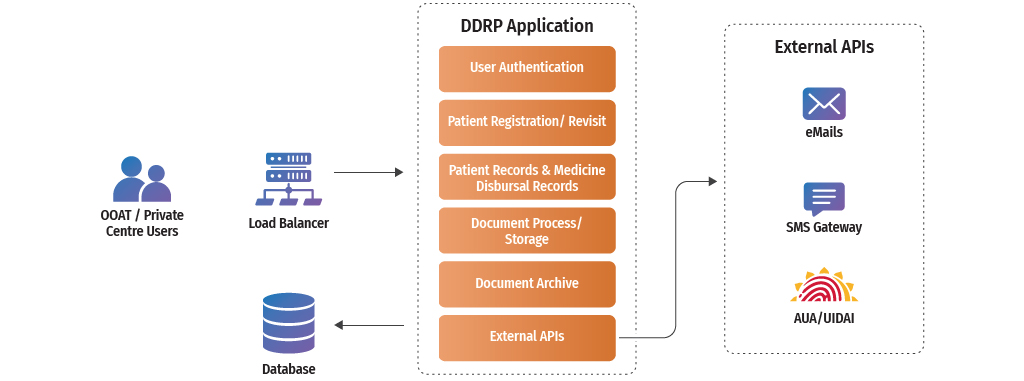
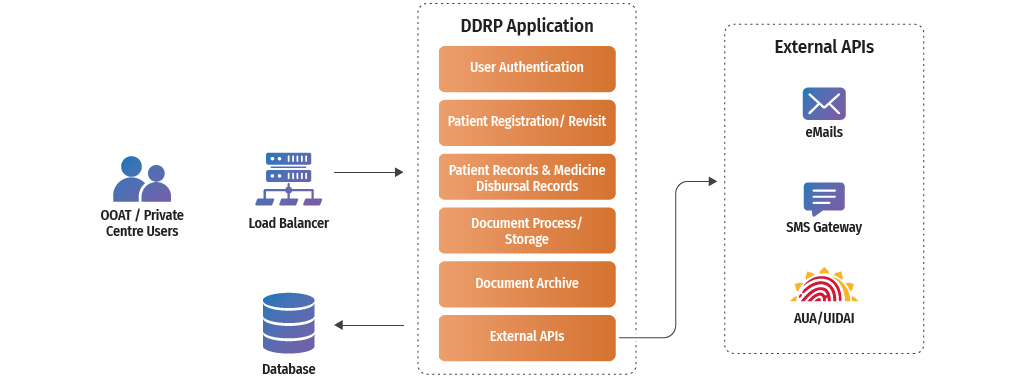
DDRP Application Software Architecture DDRP Application Software Architecture Fig 6.2: DDRP Application Software Architecture

At the core of DDRP lies a secure, scalable, and cost-effective architecture, built using opensource technologies and integrated with national digital platforms. Each component has been designed with two goals in mind: patient safety and system accountability.

  • Open-source foundation: Developed using PHP 8.3 and PostgreSQL 14.4, DDRP is lightweight, scalable, and economical, making it easy to maintain and expand
  • Aadhaar Data Vault: Sensitive identity information is stored securely, ensuring compliance with privacy guidelines and preventing misuse of patient data
  • AI/ML-enabled face authentication: A mobile application uses face recognition coupled with geofencing, verifying that patients are physically present at the centre during treatment
  • Integration with eAushadhi: By linking directly with Punjab’s drug supply chain platform, DDRP connects patient dispensing records with medicine inventories in real time
  • Automated digital workflows: From enrolment to medicine distribution, processes are digitized to replace manual registers, reducing errors and speeding up service delivery
  • Real-time dashboards and analytics: Administrators gain visibility across centres, enabling faster decision-making and proactive interventions when anomalies appear

This technology stack ensures that DDRP is not just a monitoring tool, but a living system — continuously updating, self-correcting, and adaptable to the evolving needs of public health governance.

Benefits and Impact

DDRP has transformed Punjab’s de-addiction programme by replacing manual gaps with a transparent, digital-first system.

  • Secure treatment – Aadhaar + AI checks ensure only genuine patients receive medicines
  • No pilferage – Real-time sync with eAushadhi closes supply chain leakages
  • Patient convenience – Cross-centre access reduces dropouts and improves continuity
  • Efficiency – Digital workflows speed up enrolment and dispensing, cutting wait times
  • Accountability – Dashboards and alerts provide real-time visibility for administrators
  • Better planning – Centralized data enables forecasting and evidence-based policy

In short, DDRP safeguards medicines, builds trust, and improves patient outcomes through the power of digital governance.

Way Forward

The success of DDRP is only the first step in Punjab’s larger vision of technology-enabled public health. Going forward, the state plans to strengthen the system with predictive analytics for medicine demand forecasting, ensuring uninterrupted availability of essential drugs. The Aadhaar- based and AI-driven authentication framework will be extended to other health services where identity verification and accountability are critical. Integration with national digital health platforms will further enhance interoperability and continuity of care, while future upgrades may include tracking counselling sessions, relapse monitoring, and psychosocial support to make treatment holistic. Most importantly, Punjab aims to position DDRP as a replicable model for other states, demonstrating how digital governance can safeguard resources, improve patient outcomes, and restore trust in critical healthcare systems.

Contact for more details

State Informatics Officer

NIC Punjab State Centre

Room No 31, Punjab Civil Secretariat
Sector – 1, Chandigarh - 160001

Share

FacebookLinkedinTwitter

Also read

Diffusion of ICT Solutions for Sustainable Growth

Charting change from the cutting edge of knowledge, pursuing the frontiers of research to…

Read more

e-Labour Portal, CM Dashboard & NGDRS Launched in Punjab

Hon'ble Chief Minister of Punjab, Capt. Amarinder Singh recently inaugurated 3 important e…

Read more

e I T I s : Standardizing Industrial Training Institutes in Punjab

Due to ever increasing demand for skilled manpower, large scale establishment of the Indus…

Read more

UBIQUITOUS PROMISES: Internet of Things

Human civilization over time devised various ways to communicate and interact with one ano…

Read more

OPEN SOURCE HARDWARE- An Emerging World of Opportunities

The IT world is witnessing phenomena of a kind due to massive availability of open source…

Read more

INTERNETING IN THE FUTURE - WEB 3.0

Internet started as a military exercise to link offices across the USA, has become ubiquit…

Read more

PUNJAB - ESTABLISHING TRANSPARENT AND ACCOUNTABLE GOVERNANCE

Punjab has maintained its growth momentum because of a number of policy measures by the st…

Read more