e-Governance: The Journey from Access to Assurance
e-Governance in India began with a promise— to make governance efficient, accountable, and accessible. Over the past decade, that promise has evolved into a practice through the Digital India initiative, launched in 2015.
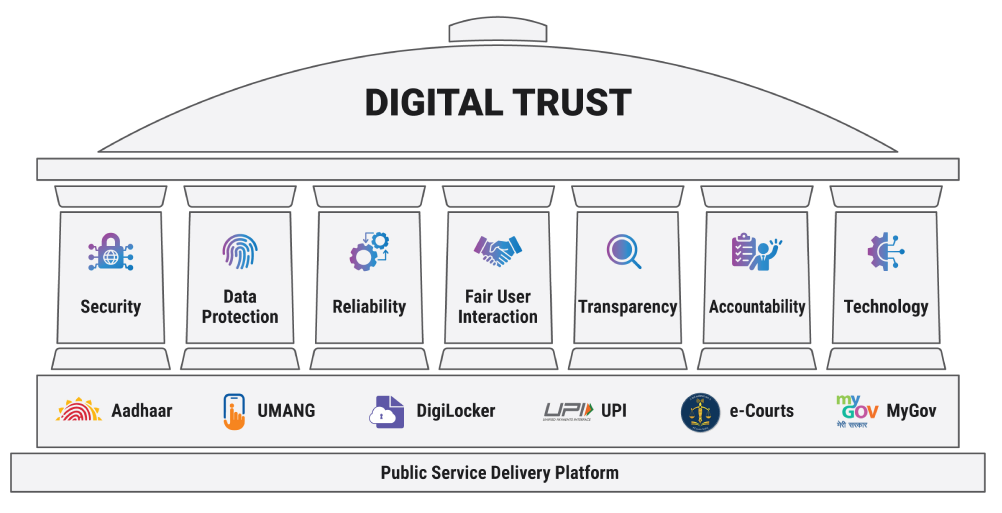
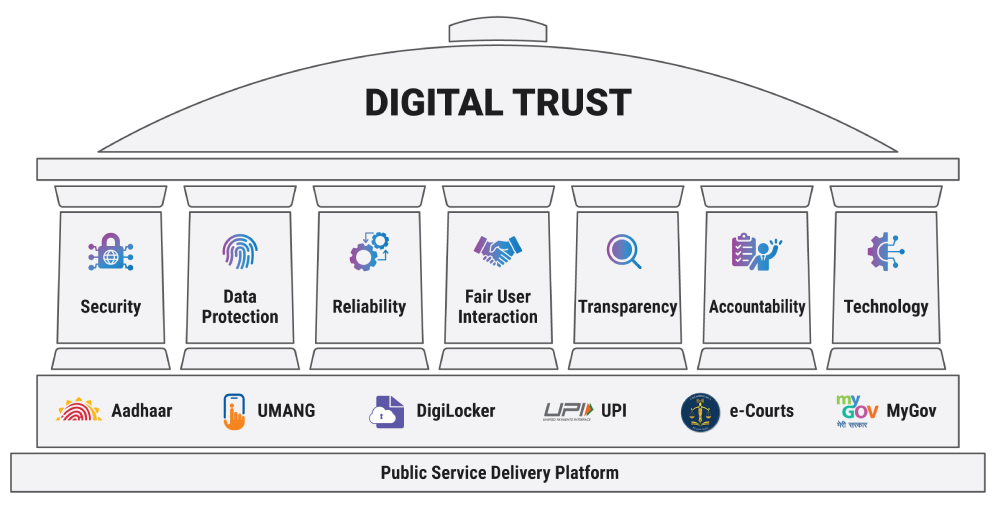
Platforms such as Aadhaar, UMANG, DigiLocker, e-Courts, and MyGov have redefined public service delivery. The e-Kranti mission, with its mobile-first and cloud-first approach, has brought government services to the citizen’s fingertips. Initiatives like BHIM and UPI have made digital payments a part of daily life, empowering millions and advancing financial inclusion.
India today ranks among the world’s top nations in the UN e-Government Development In-dex—proof that digital governance has moved beyond convenience to become a catalyst for social equity. Yet challenges remain: cyber threats, limited digital literacy, and connectivity gaps in remote regions. The solution to these challenges does not lie in technology alone—it lies in trust. Trust that systems are secure, data is respected, and every citizen is seen.
Defining Digital Trust
The World Economic Forum defines digital protrust as the expectation that digital technologies and service providers will act responsibly, tect stakeholders’ interests, and uphold societal values. In simpler words, it is the belief that the digital world will not betray its users.
Standards such as ISO/IEC 38505 advocate for ethical and accountable data management, while frameworks like India’s Digital Personal Data Protection Act (DPDP), 2023, strengthen the governance of personal information.
For institutions, digital trust means more than compliance—it means character. For citizens, it means assurance that their identity, information, and dignity are protected.
Pillars of Digital Trust
Security
The foundation of trust begins with protection. Strong encryption, secure storage, and multi-factor authentication ensure that citizen data remains untouchable. Continuous monitoring and real-time threat response form the government’s digital shield against breaches.
Data Protection
Citizens must have confidence that their data is handled with care and consent. Responsible data retention and transparent policies prevent misuse, turning privacy from a privilege into a right.
Reliability
A citizen’s trust grows when services do not fail. Reliable systems—those that do not crash under load, that deliver certificates, payments, and reports on time—build belief in governance itself.
Fair Interaction
Digital services must be fair, unbiased, and inclusive. As artificial intelligence takes greater roles in decision-making, the algorithms that serve governance must remain accountable to human ethics.
Transparency
When citizens understand how their data is used, mistrust fades. Open dashboards, transparent policies, and clear communication transform skepticism into confidence.
Accountability
A trusted digital government owns its errors as much as its successes. Defined accountability, honest reporting, and ethical remediation fortify the credibility of institutions.
Technology
Emerging technologies—blockchain, ze- ro-trust security, AI-driven threat detection, and decentralized identity—are shaping the future of governance. Tomorrow’s citizens will not just use digital systems; they will trust them because those systems are verifiable, explainable, and secure by design.