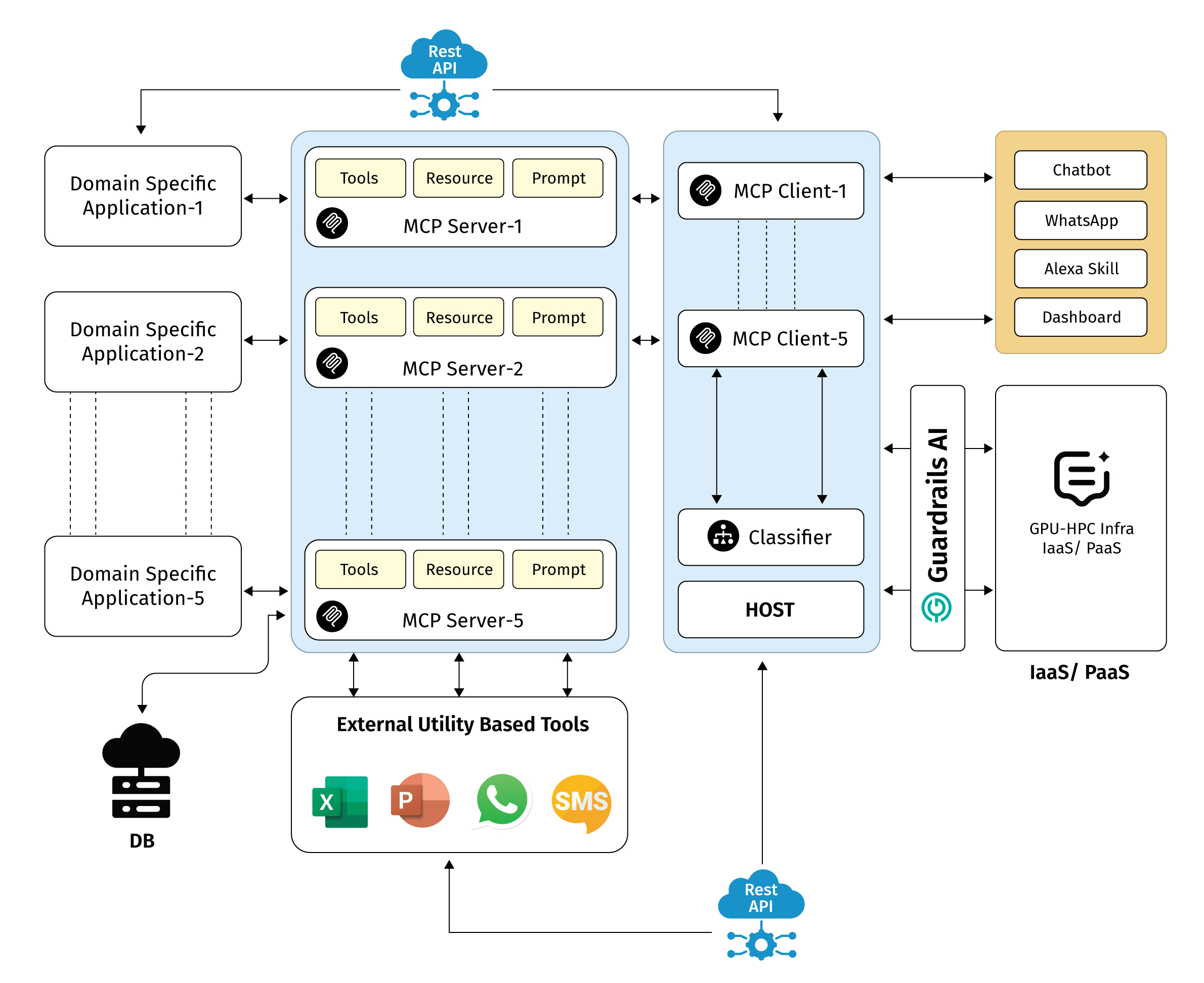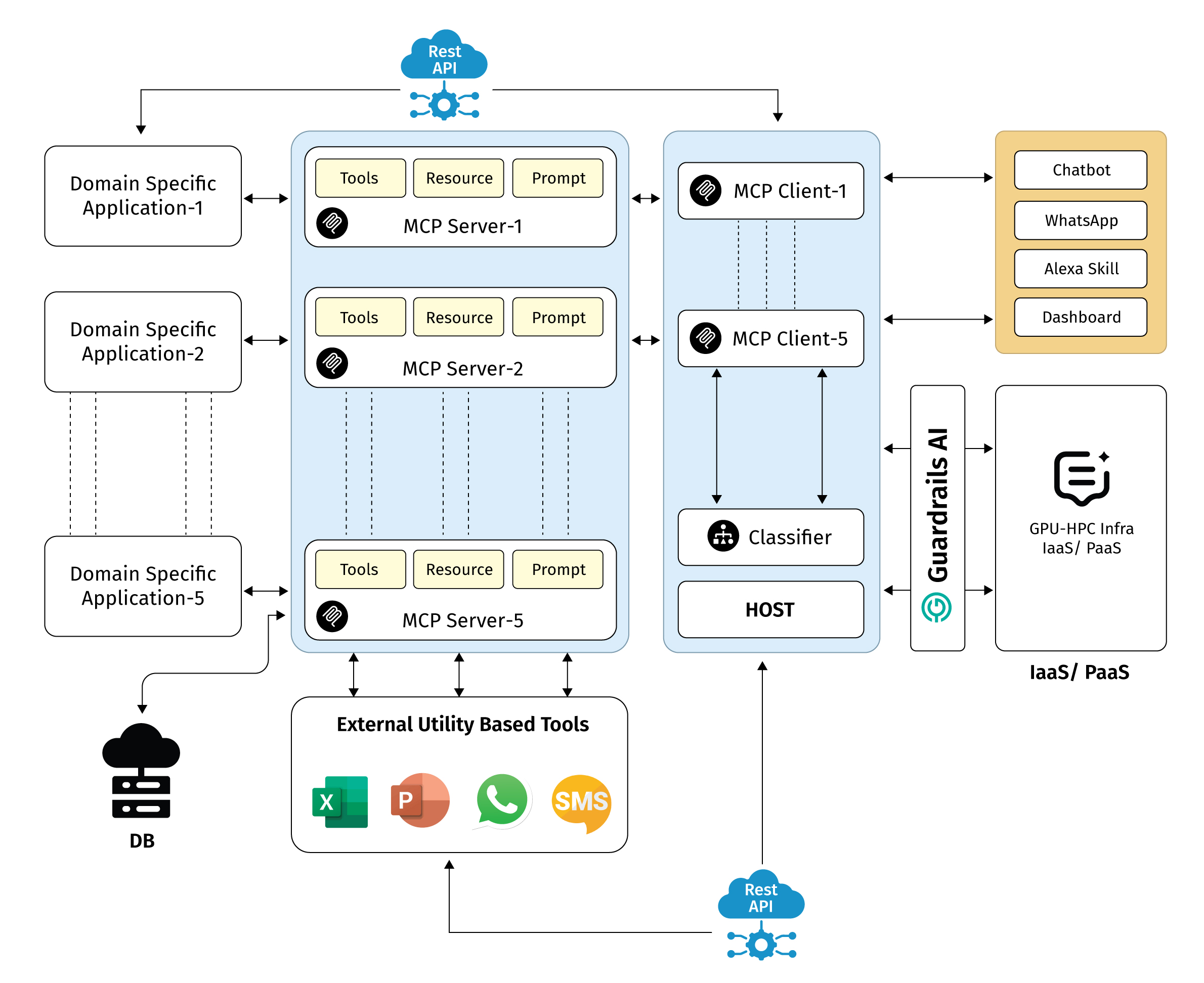
MCP is an open standard that allows AI models to securely connect with external tools, data, and systems. By replacing complex, custom integrations with a unified client–server architecture, MCP enables safe, scalable, and governed AI interactions. It transforms AI from a standalone language model into a reliable, action-capable system suitable for enterprise and mission-critical use.
Artificial Intelligence (AI) systems— particularly Large Language Models (LLMs)—have made remarkable advances in understanding, interpreting, and generating human language. These models are now widely deployed across domains for tasks such as information retrieval, document summarization, decision support, content generation, and conversational user interfaces. Their ability to reason over vast amounts of text and respond in natural language has significantly enhanced productivity and accessibility in both consumer and professional settings.
However, despite these advances, LLMs fundamentally damentally operate as isolated computational systems. By design, they lack a native, standard- ized, and secure mechanism to interact directly with external tools, live databases, enterprise applications, APIs, or operational workflows. As a result, while LLMs can recommend or describe actions, they cannot reliably execute them with- in real-world systems without extensive external scaffolding.
This limitation severely constrains the practical deployment of AI in real-world and enterprise environments, where access to real-time data, controlled system actions, and compliance with organizational policies are critical. Existing integration approaches typically rely on custom-built connectors, bespoke middleware, or tightly coupled interfaces. These solutions are often brittle, difficult to scale across multiple models or tools, expensive to maintain, and introduce significant risks related to security, access control, auditing, and long-term governance.
The Model Context Protocol (MCP) addresses these challenges by introducing an open, standardized communication framework that enables AI models to interact with external systems in a secure, governed, and interoperable manner. By serving as a common interface between AI models and real-world tools, data sources, and workflows, MCP eliminates the need for ad-hoc integrations and enforces a clear separation between AI reasoning and system execution. This architec tural approach allows AI systems to move beyond passive language understanding and evolve into reliable, action-oriented applications—capable of operating within enterprise-grade constraints while maintaining trust, security, and scalability.