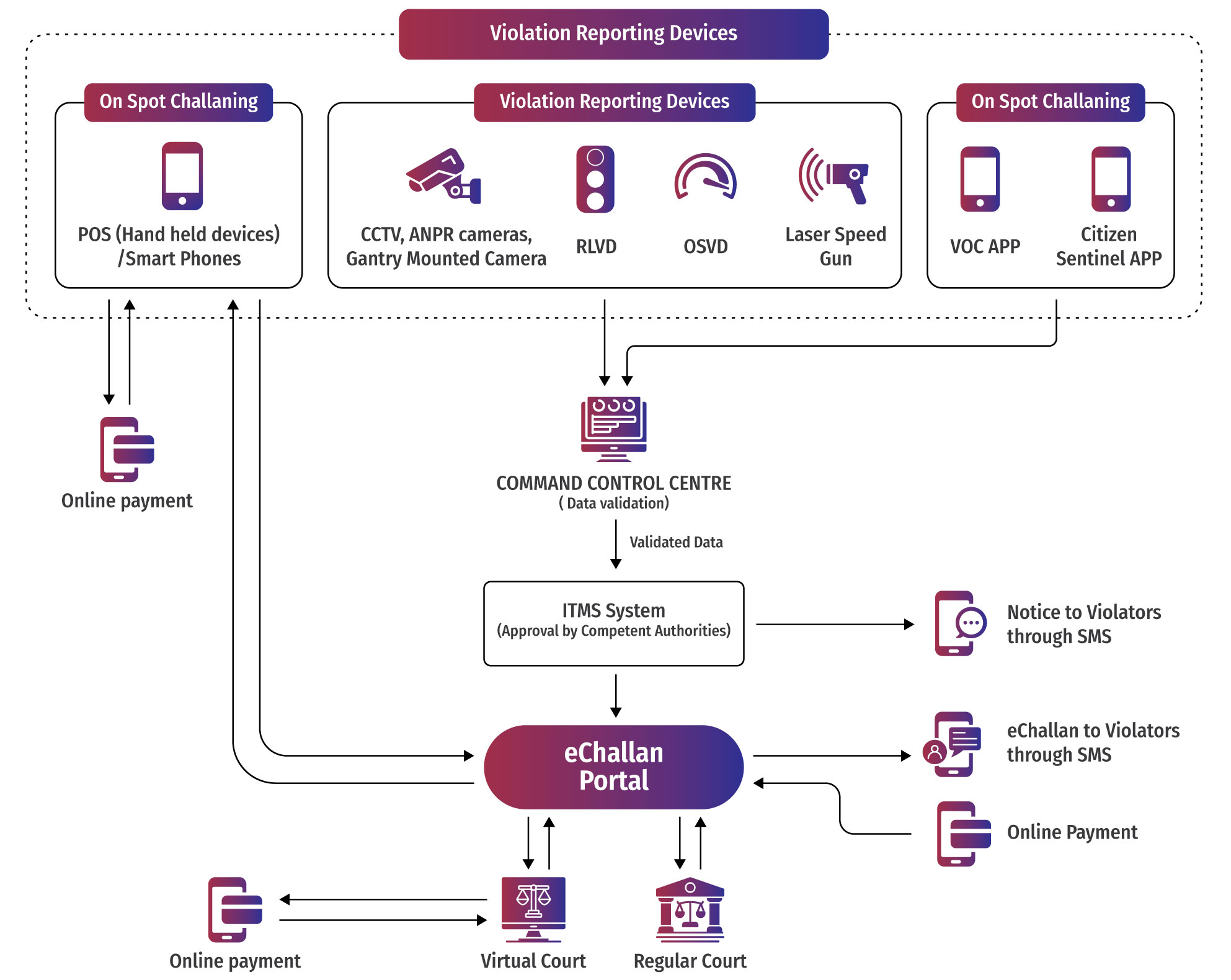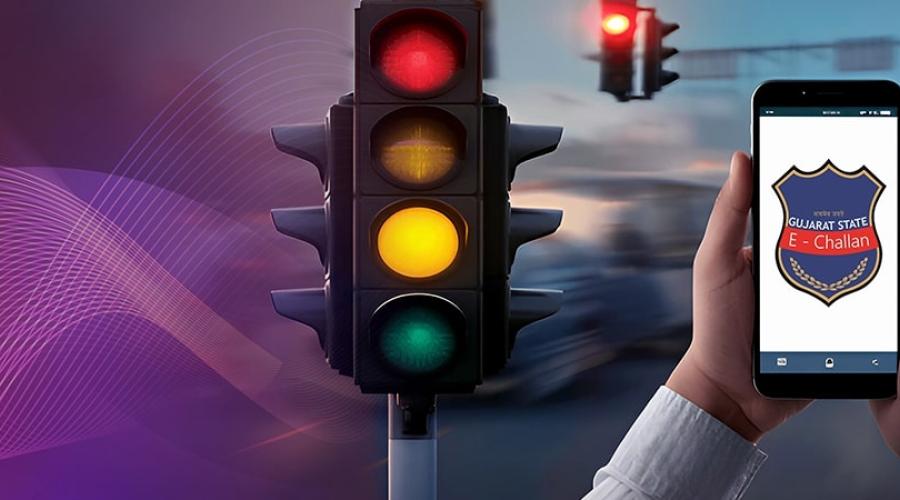
The eChallan system, implemented across all 38 police districts of Gujarat under the “One Nation One Challan” initiative by MoRTH, is a comprehensive digital platform for traffic enforcement. Integrated with VAHAN, SARATHI, and Intelligent Traffic Management Systems, it enables real-time detection of violations, issuance of challans, and multiple payment options. Citizens receive instant notifications and can pay fines via mobile apps or web portals. Unpaid challans are forwarded to Virtual Traffic Courts after 90 days. The initiative enhances transparency, efficiency, and accountability, while empowering citizens with grievance redressal mechanisms and access to digital justice through virtual court proceedings.
The rapid urbanization of Indian cities has brought with it an urgent need for smarter traffic management and enforcement mechanisms. To address this, the Ministry of Road Transport and Highways (MoRTH) launched the One Nation One Challan (ONOC) initiative—a nationwide drive to digitize and streamline the process of traffic rule enforcement. Gujarat, a leading state in digital governance, has emerged as a pioneer in this space with the implementation of the eChallan system across all its 38 Police Districts.
Launched in 2023, the eChallan initiative in Gujarat is a transformative step in creating a transparent, accountable, and citizen-centric enforcement system, leveraging real-time surveillance technologies, mobile-enabled enforcement tools, and seamless integration with national databases such as VAHAN, SARATHI, and Virtual Courts.
Recognizing the challenges of traditional, paper-based traffic enforcement, the Gujarat government has adopted eChallan as part of its larger digital transformation journey. The system empowers traffic officers with mobile-based tools to issue fines on the spot, provides real-time notifications to violators, and offers multiple digital payment options to citizens.
Importantly, Gujarat is now in the process of setting up Virtual Traffic Courts under the ONOC umbrella, further strengthening the legal and administrative backend of traffic enforcement. This will allow cases to be adjudicated digitally, reducing the burden on physical courts and offering citizens a more accessible legal route.