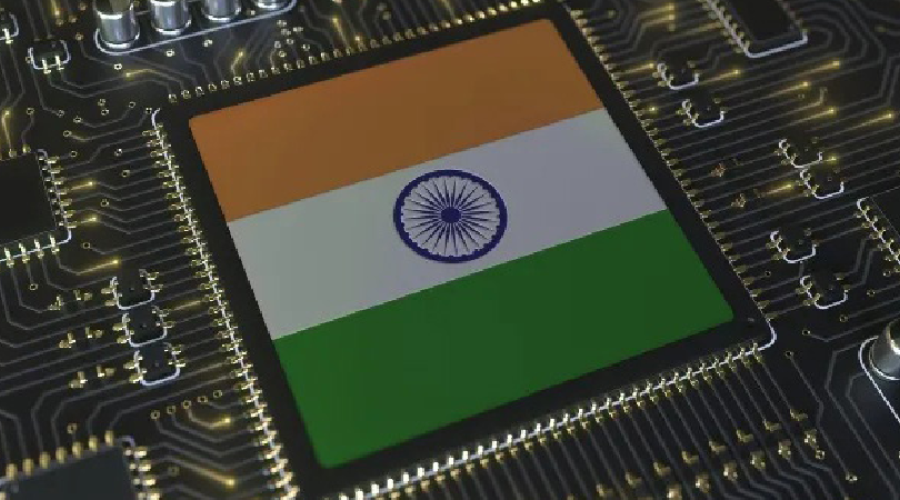
The Government of India is accelerating the democratization of semiconductor design and innovation by enabling Indian universities and start-ups to access industry-grade Electronic Design Automation (EDA) tools and Multi-Project Wafer (MPW) fabrication services through the ChipIN Centre and Semiconductor Laboratory (SCL), Mohali.
Under the Chips to Start-up (C2S) Programme, 122 design tapeouts have been achieved by 46 institutions across the country in five MPW shuttles conducted over the past year. The initiative has witnessed more than 175 lakh hours of EDA tool usage by over 380 academic and start-up organizations, positioning India as one of the world’s largest collaborative chip design ecosystems.
During his visit to SCL Mohali on 28th November 2025, Hon’ble Union Minister for Electronics & Information Technology, Shri Ashwini Vaishnaw, handed over 28 student-designed chips fabricated under the C2S Programme. Commending the achievement, the Hon’ble Minister said, “India is rapidly emerging as a distinctive leader in the global semiconductor landscape. The large-scale semiconductor development ecosystem being created in India is unique to our nation.”
The ChipIN Centre, established at C-DAC Bengaluru, provides access to advanced design workflows, IP cores, compute infrastructure, and mentorship for academic institutions. It aggregates student chip designs from across India and coordinates fabrication at SCL Mohali using 180 nm technology. Each MPW shuttle combines multiple verified designs on a single wafer, reducing cost and turnaround time.
Over the last year, the ChipIN Centre has supported over one lakh students and 90 start-ups, significantly expanding India’s semiconductor design capacity. Acting as a national value chain aggregator, it is also preparing to support future advanced node design and fabrication requirements.
Shri Vaishnaw emphasised that this initiative aligns with the Hon’ble Prime Minister’s vision of building India’s strategic self-reliance in critical technologies. He noted that SCL Mohali will play a central role in ensuring indigenous chip production for national needs and in advancing India’s aspiration to become a global semiconductor hub.